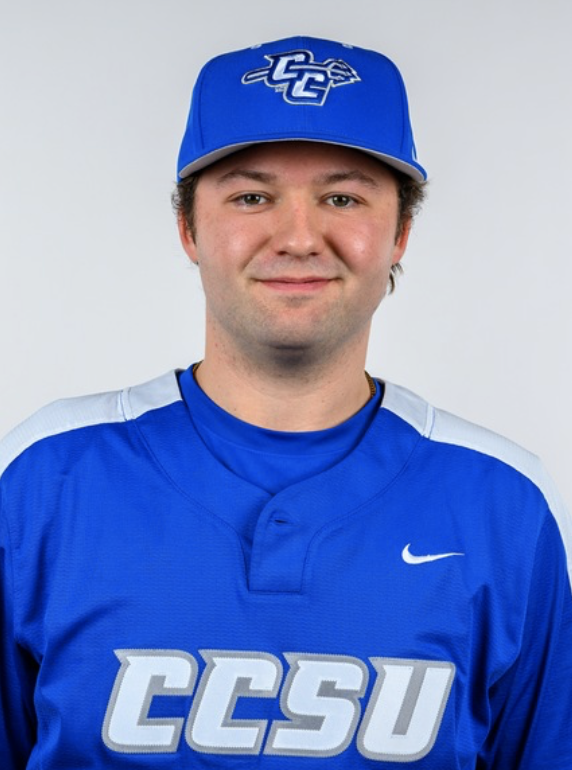
An athlete’s journey can span decades, or it can last a year. Richie Kerstetter has an intimate relationship with his journey because he’s experienced the elation of raising a trophy over his head, but also the mortifying nature of hearing a doctor tell him he might not be able to play again.
In high school, Kerstetter found major success, being part of the All-New England team as a senior, but it came with its costs.
“I was very fortunate to obviously be able to be in a spot in high school where I was athletically advanced, to where I’m being able to show off my skills in front of all these Division I coaches, and I felt like St. Joseph’s offered a spot where I was far enough away from home, but able to, you know, if I wanted to, take a train ride home,” Kerstetter said. “But the thing that helped me, I think, with that transition to college was even before that, I had left my local private high school in Fairfield, Notre Dame, and I had left and went to prep school at Canterbury up in New Milford.”
Kerstetter said his time at Canterbury not only helped with the college lifestyle but with his performance on the field as well.
“I left [Notre Dame] and repeated my junior year due to COVID, and I had been injured during that stretch of time, too,” he said. “So it kind of worked out for me to do that fifth year in a sense of high school and get my feet wet with living away from home as well. I think that really helped me and shaped me to be able to go into college feeling confident and feeling like I was ready to, you know, perform, not only on the field but control the academic side of it and being able to keep up with my schoolwork.”
When reflecting on his time at St. Joe’s, Kerstetter said a change was necessary to regain the confidence that he once had.
“After two years, obviously, it didn’t quite feel like home, and I ultimately made the decision to enter the transfer portal,” he said. “I had known Coach Hall prior to going to St. Joe’s, and thankfully, he reached back out. It was probably the best decision that I could have made to come back closer to home, trust his word, trust Coach Hickey’s word. Seeing how they develop and how they succeed and constantly win, that’s the environment that I want to be around. I got put in a great spot last year, where we succeeded and ended up winning a championship.”
Kerstetter found himself needing to place his trust in the people around him as a way to not only make progress with his game but as a necessity to grow as a person.
“I think a lot of it goes into trust,” Kerstetter said. “You have to trust, especially in baseball, you have to trust your coaches, you have to trust your teammates, you have totrust all of that work that you put in to be able to be at that level. So I think the ability to just let others help and let others be a part of that journey as well is a part of the process. Especially in baseball, like it’s not a one-man game, it’s nine people competing against nine other people.”
He continued by mentioning his process of allowing people in and allowing himself to be helped.
“A big thing for me is the ability to let outside aspects in while also controlling it, so I’m not letting it negatively affect me to where it’s hurting more than helping. In that sense, just the trust of those teammates, like those encouragements, like you’re going to show up,” he said.
“And it’s those long days that feel like they drag on to where you may feel like you don’t have your A game, but it’s those teammates and those coaches that pick you up and help you strive to that finish line. Strive you through those late innings or get you through those tough games. It’s rewarding at the end of the season when we all hold the trophy together.”
One of the personal issues he faced was not having his support system around when he was going through some of the hardest times of his collegiate career.
“It’s a luxury that you don’t know that you have until you don’t have it. For me especially, I really struggled when I was down in Philadelphia my redshirt freshman year because I had surgery on my elbow my freshman year,” he said. “So I went in there and immediately redshirted because I had Tommy John. Going to those away games and, like I said, maybe not having your best stuff there, and then you go out and the game’s done. And my parents and my family aren’t there. So I feel like not having that was a little tough.”
Now that Kerstetter is closer to home, he feels the support, and his gameplay and outlook on the game have improved.
“Looking at that side of it, where now I can come out of the game and it’s like, oh, I’m instantly seeing my parents, I’m seeing my friends, I’m seeing all that family aspect where I guess I didn’t see it before, I think that really helps it because it’s that extra pickup when you need it, because baseball especially is a game of failing,” Kerstetter said. “You have to push through that constant failing to ultimately succeed.”
The injury process for any athlete is one that is tumultuous, but Kerstetter recognizes an aspect that he said some overlook.
“The biggest thing that stuck out to me throughout that whole process was not the physical side of it, getting my arm back in shape and trying to come back in X amount of months to be able to perform. It was definitely the mental side of it,” he said. “Being able to get over that and gain that confidence back to know, like, go out and trust all the physical therapy that you put in, all the time and all that work that you put in. Trusting it and being able to go out and realize that you’re not hurt anymore, you’re back and you’re fully healthy and just go, let it show. I think the mental side is a huge thing that gets overlooked, especially coming back from injury.”
Kerstetter said his journey has been anything but seamless.
“Last spring, halfway through the year, which not many people had really known about, I had torn my ACL, MCL and meniscus halfway through our season last year, so we didn’t really know what exactly it was until I had continued to play on it for a little while,” he said. “So I had gone out and pitched on it and then finally gone to the trainers. They had said meniscus originally, so we had made a decision where I felt comfortable pitching, so I finished the rest of the season on it.”
The price to pay was one with no concrete answer, and he would have to go through adversity once more just to play again.
“I actually had surgery this past summer in June on my knee. So that was like, outside of seeing the whole Tommy John process, I think that shaped this past recovery to be like, OK, now you know what you’re doing,” he said. “You got to just replicate that again. Now you know what the mental side of it is and how difficult that is. So I really locked in on the mental side of things, took that to another level, and that ultimately helped me get back a little bit sooner than expected and possibly in the best shape of my life, to be able to be there for my teammates and compete at that level this year.”
When Kerstetter found out about his recent injuries, his response was a sobering one.
“I would just say shocked. The biggest thing that helped me get through that and realize I’m good enough, like I’m still OK to pitch, was those families, those friends, those teammates that were around me, that were constantly there for me and still able to be around and give me encouraging words to support me in that time,” Kerstetter said. “It sucked going through the rest of that season being hurt, but I wouldn’t have wanted it any other way because obviously how it ended. I think the way it shaped that whole thing just makes it a little bit more of a cooler story, right?”
Kerstetter attributes not only his success but the team’s success to the rigorous training the coaching staff puts them through.
“Our coaches are great at putting us in a spot where our mental aspect of the game is really tested through practice, so now it’s almost like the game is very rewarding when we go out and we compete and face that adversity that we always do in baseball,” he said. “Coach Hickey and Coach Hall and the rest of the coaching staff do a very goodjob of putting us through tests through the offseason, so when we get ready for the season, it’s just go out and perform. Once we get in that spot, it’s fun when we’re winning and gelling as a team.”
Kerstetter credits his team for a lot, but the work didn’t happen overnight. The bonds he’s formed and the relationships he’s created have all been part of getting him back on the field.
“I would just say a huge shoutout to everybody at Central — all the coaching staff, all my teammates who this year and last year went on a great road trip last year winning NEC,” he said. “Obviously, it’s a different team, new environment, new guys, and I think the best thing is these guys just want to go out there and play loose and show what everybody’s got. They’re a very good group of guys that’s young but ready to go. We have a lot of anxious guys that just can’t wait to go out there and show what they have to prove.”
As for his journey, Kerstetter described it in a unique way.
“I’d say a roller coaster, just because when it started off I went in on the high horse going into college. I’m thinking the sky’s the limit for myself,” Kerstetter said. “But initially getting hit right in the face with that injury created a huge mental steep path that I had to overcome and get myself in that spot. Then I felt like when I was there, the mental side of things killed it, and it kind of stayed there for a while. Then once I felt reignited here when I transferred in last year, I felt like I was back up on that high note, and then the injury came back and brought it down. I feel like I just want to stay at the top of that roller coaster now and continue to cruise and see what happens.”