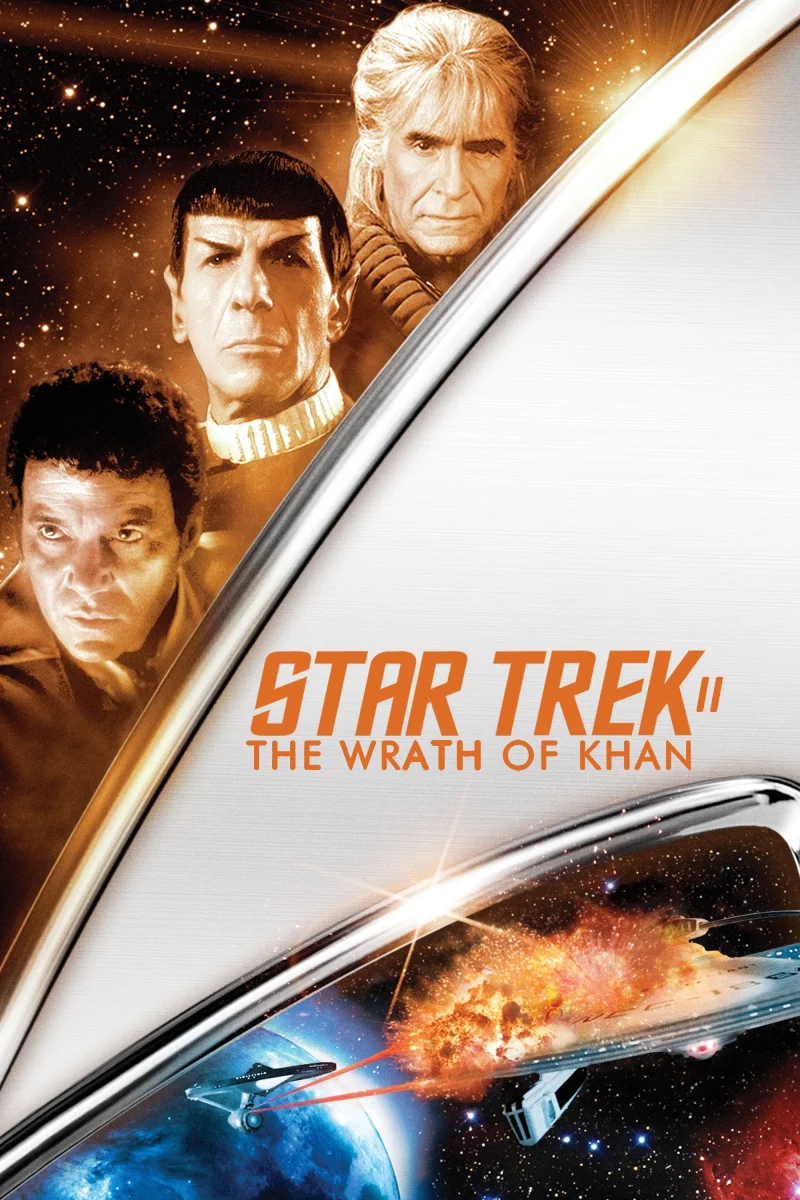
More than 40 years after its release, Star Trek II: The Wrath of Khan remains one of the most compelling films to watch.
Released in 1982, following the debut of Star Trek: The Motion Picture, The Wrath of Khan raised the stakes with more action after criticism that the first film moved too slowly. The film opens with the Kobayashi Maru, a Starfleet training exercise designed as a no-win scenario. Viewers are introduced to Lt. Saavik, a new officer testing her command abilities.
For those unfamiliar with its history, Star Trek began as Star Trek: The Original Series, a television show that aired in the 1960s and followed the crew of the USS Enterprise as they explored the galaxy. Main characters included Leonard Nimoy’s Mr. Spock, a half-Vulcan, half-human science officer, and William Shatner’s Capt. James T. Kirk. Both characters command the Enterprise boldly.
By the time The Wrath of Khan premiered, Kirk had been promoted to admiral and Spock had become captain of the Enterprise. However, despite his new position, Spock shows deep respect for Kirk’s abilities and invites him to assume command, underscoring the trust and relationship they share. The film highlights the depth of their bond.
The return of Khan Noonien Singh, played by Ricardo Montalbán, heightened the film’s drama. Khan first appeared in Season 1 of Star Trek: The Original Series, attempting to kill Kirk and seize control of the Enterprise. Kirk exiled Khan and his followers to the planet Ceti Alpha V. In the film, Khan explains that the planet was devastated by environmental catastrophe shortly after their arrival. When Cmdr. Pavel Chekov and Capt. Clark Terrell discover Khan years later, he vows revenge against Kirk.
After commandeering the USS Reliant, Khan attacks the Enterprise and steals the Genesis Device, a project designed to create life on a new planet. When he is defeated by Kirk, Khan activates the device in a final attempt to destroy the Enterprise. To repair the warp drive and save the ship, Spock enters a radiation-filled chamber, knowing the exposure will be fatal.
The sacrifice is deeply emotional. When Kirk is summoned to the engine room, he realizes Spock is dying and rushes to his side. Separated by glass, they share one final conversation. Spock tells Kirk, “Don’t grieve, Admiral. It is logical. The needs of the many outweigh the needs of the few, or the one.” Fighting back tears, Kirk later says Spock’s was “the most human” soul he had ever encountered in his travels.
Before entering the chamber, Spock performs a Vulcan mind meld on Dr. Leonard McCoy, telling him to “remember.” Through the mind meld, Spock transfers his consciousness to McCoy.
The scene sets the stage for Star Trek III: The Search for Spock, directed by Nimoy. Kirk later learns from Spock’s father, Sarek, that Spock’s body has regenerated on the Genesis Planet and that his consciousness resides within McCoy. When Starfleet forbids a return to Genesis, Kirk and his crew risk court-martial by stealing the Enterprise to return Spock’s body to Vulcan so his consciousness can be restored.
At the end of that film, Spock asks Kirk why he chose to act, and Kirk replies that the needs of the one outweighed the needs of the many, underscoring the void Spock’s absence left in their lives.
Fans who saw the film in 1982 recall leaving theaters in stunned silence, many in tears over Spock’s sacrifice. That enduring emotional impact helps explain why The Wrath of Khan has remained popular for decades.