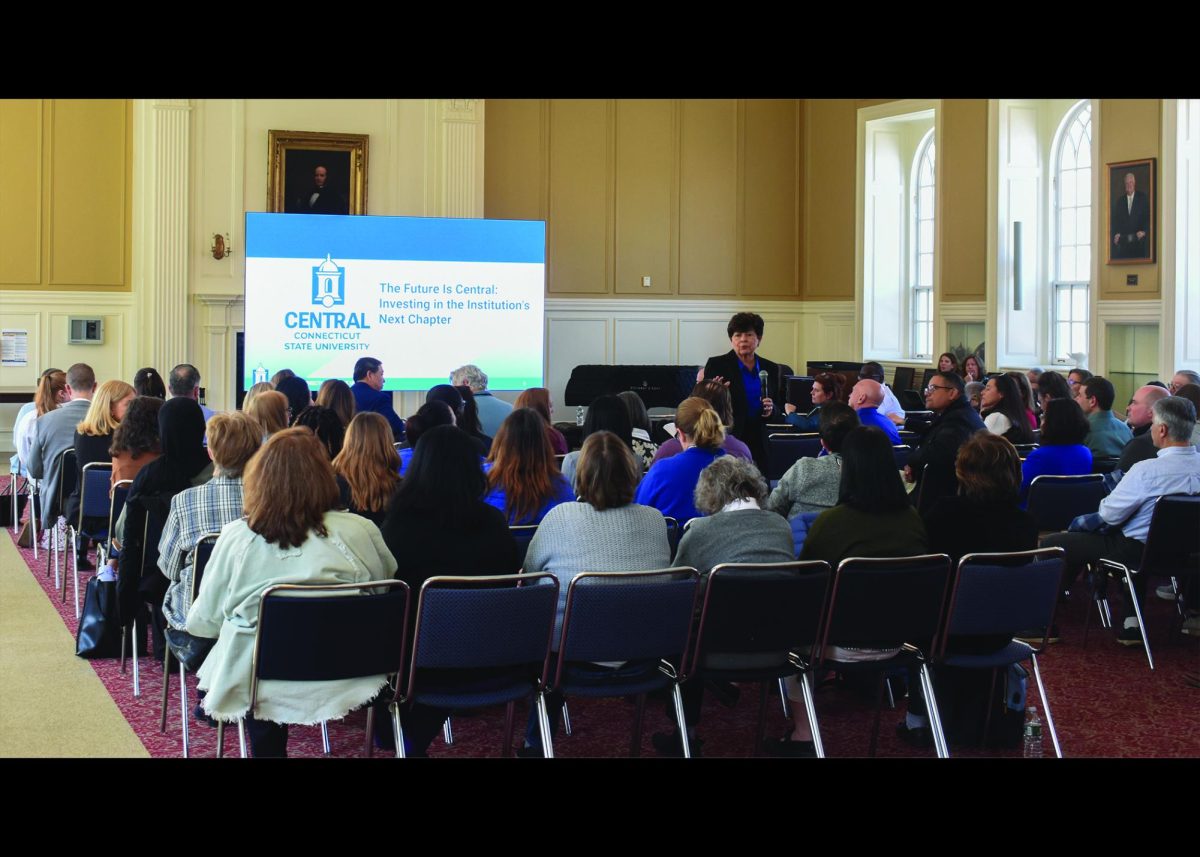
Representatives from the Polytechnic Task Force gave updates on the progress their constituencies have made concerning the Research 2 and polytechnic proposal at an open forum in Davidson Hall on April 8.
With the July deadline inching closer, the seven chairs are part of the proposal process in their own ways.
Some of the goals they are trying to achieve prior to submitting the proposal include taking inventory of the accumulation of resources on campus; creating options for a potential name change; taking feedback from faculty and students to incorporate their input into the drafting process; budgeting with the intention of overseeing the logistics of the transition; and identifying what potential changes to the curriculum may look like.
President Zulma Toro emphasized that the proposal is just phase one of the entire process.
“What we are going to submit is the concept and the ideas. We are not going to submit academic programs that are completely better,” Toro said. “If you look at what other institutions have done, for example, California State University, they submitted to the state, and their academic programs are still, some of them, under development. That’s part of the implementation. This is the first phase. The second phase will be the implementation itself.”
As part of efforts to inform students about what the transition entails, groups like the Student Government Association have created events such as a scavenger hunt to make students more aware of resources on campus. This included a pamphlet of digestible information related to the proposal.
The information included the long-term goal of continuing to provide high-quality education while creating new partnerships that will expand Central’s network. It also stated that tuition will not increase based on the proposal being accepted, the College of Liberal Arts and Social Sciences (CLASS) will receive the same level of support it currently receives from the university, it addressed the long-term benefits of a polytechnic institution, and it explained the experiential and applied learning aspects of such an institution.
This rollout of information aims to make students more aware of what the transition may entail, as the university continues working to build favorable public opinion.
However, at the forum, numerous professors and students spoke out to voice their concerns about the transition.
From asking whether there is a possibility of pushing back the proposal, as the process seems rushed and input has been limited, to recognizing the institution’s current shortcomings and bringing attention to changes that need to be addressed, the proposal continues to receive pushback.
But Toro remains optimistic about the future because the transition, to her, is the next step for Central Connecticut State University.
“The fact that the ideas are flowing, that you are engaged in the process, makes me very happy, because at the end of the day, this is an opportunity for us to decide who we would like to be and how we would like to evolve in the future,” Toro said. “I’m asking everyone to rethink what we are doing in such a way that we can engage more students. As with any change, I am not expecting that 100 percent of the people will be supportive to start with; that’s not going to happen. But at the end of the day, it’s about our students, our communities, our state.”