
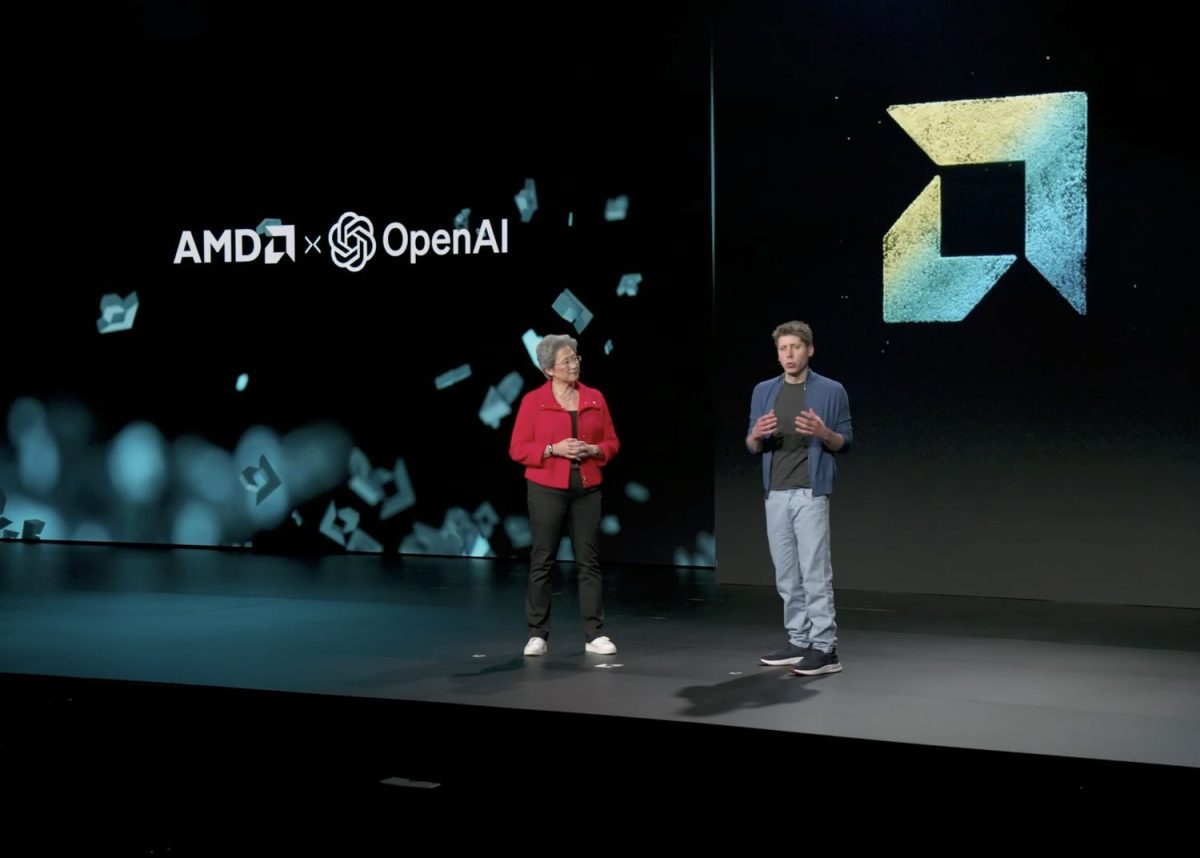
When OpenAI signed a deal with AMD to deploy six gigawatts’ worth of AMD chips, the tech world cheered, sending AMD’s stock to all-time highs. But behind the multibillion-dollar partnership lies a much more troubling implication: its impact on everyday Americans.
Six gigawatts aren’t just numbers; it’s equivalent to the power consumption of about five million homes. With electricity rates already climbing about 6% last year, triple their usual pace, it’s evident that initiatives like this impact everyone, whether they ever use artificial intelligence.
U.S. data centers already consume about 4% to 5%t of the nation’s power.
“AI training centers—hyperscale facilities—can draw hundreds or thousands of megawatts at a single site,” energy researcher Abraham Silverman told Newsweek. “It’s like building five nuclear plants into the grid every year, just for AI.”
These concerns aren’t new; they’ve been consistent through generations.
“The same concern has attended the emergence of all radically new technologies over history,” energy analyst Mark P. Mills wrote in the City Journal.
Paradoxically, each wave of innovation that initially strains resources often leads to making them cheaper and more efficient. Since 1998, the price index for consumer technology has dropped more than 90%, even as computing power has grown exponentially.
It’s possible that GPU technology will follow a similar trajectory to the personal computer revolution of the 1990s—initially expensive, energy-intensive, but ultimately driving costs down. Still, that outcome depends on how quickly the energy sector and manufacturers adapt. Unlike past tech booms, AI’s progress isn’t limited by imagination; it’s constrained by computing power.
This paradox is precisely what investors are betting on. Will deals like the one between AMD and OpenAI deliver productivity gains that justify their carbon footprint, or will they succumb to high maintenance costs and grid restraints?
The outcome will shape how capital flows into a broader economy.
Whether or not AI deserves the energy it consumes, it’s clear the U.S. is headed toward a modern industrial revolution, with companies like Nvidia, AMD, Microsoft and Google building the digital infrastructure of the future. However, households pay the bill whether they use it or not.