
Under the current administration, millions nationwide have been under immense scrutiny for certain verbiage and words utilized during everyday life.
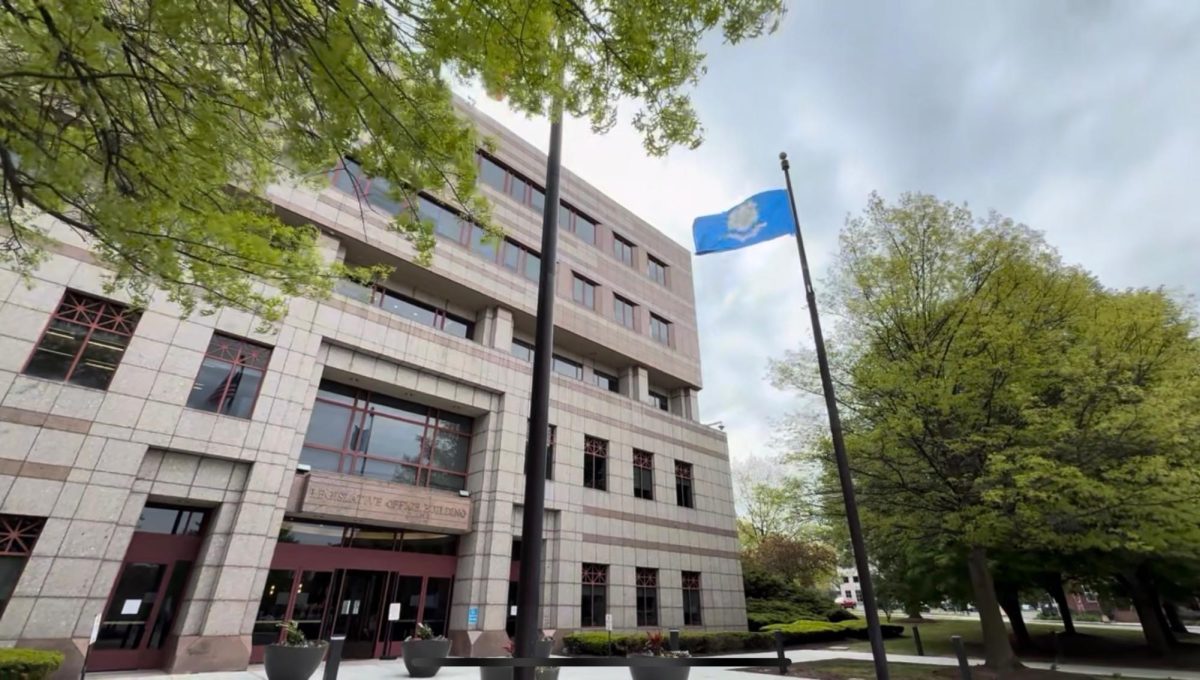
In the “Unleash the Watchdog: Defending the Freedom of Speech and Free Press” panel hosted by the Journalism Department at Central Connecticut State University on Oct. 7, panelists discuss the current climate of the media landscape.
The moderator Kate Farrish, a journalism professor at University of Connecticut, a Freedom of Information Commissioner and president of the Connecticut Foundation for Open Government (CFOG) set the scene for the tribulations journalists are currently going through.
“Since Jan. 20, 2025, the Trump administration has deployed executive orders, regulatory threats, and legal intimidation to silence dissent and punish critiques,” she said. “His orders have expanded the definition of domestic terrorism to cover some views that have long been protected as free speech. Reporters have been harassed, detained and even deported for covering protests in America.”
Journalists are not the only aspect of journalism that is under the administration’s scrutiny. Corporations such as the Public Broadcasting Service (PBS) lost all its funding, and additional cuts to public media, adding up to well over seven figures, are progressively accumulating under the Trump administration, trying to exert control over the media, determining who can or cannot disseminate information to the public.
Elizabeth Hamilton, an Executive Editor at the Connecticut Mirror, said in the current political climate, it has escalated to the point of posing real dangers for journalists.
“Something that has been worrying me ever since the 2016 election is the destabilization of truth and fact. That troubled me greatly,” she said. “As a newsroom leader who’s working with journalists every day, it’s deeply unsettling for us as journalists to then have a significant part of the population view that work through the lens of just complete dismissal or refusal to accept fact.”
“As the editor of the organization, I never thought when I went into this profession, I would go to bed at night worrying about the safety of reporters,” she said.
While the public’s transitioning sentiment may mirror those of the current administration, the courts still work, and reaching a solution through the judicial system is uncorrupted by any one individual.
Tenured First Amendment lawyer and member of CFOG, William S. Fish Jr., provided his legal insights to emphasizing the importance of knowing one’s rights and understanding the limits of free speech.
“The First Amendment is designed to allow different viewpoints to be heard,” he said. “It’s not something that people are generally aware of, but the First Amendment doesn’t protect you; free speech only goes so far. I remain optimistic that the First Amendment is going to remain unscathed.”
Fish makes it clear that events can be circumstantial, legal protections are in place to prevent government overreach.
“You can’t, as a government, take regulatory action to try and coerce somebody based on what they’re saying or what they’re not saying … the Supreme Court has said that unanimously.”
The connection between the topics covered, at their core, is the journalists themselves.
Dan Haar, a columnist for Hearst Media Connecticut, said that how journalists present themselves through their work can be a reflection of who they are as a person. Not a machine pushing out propaganda.
“We’re in a very difficult situation because we should be setting aside the fake patina of non-biased and stopping the mobilization of an increasingly authoritarian regime,” he said. “This idea that mainstream media institutionally has some corporate or political agenda is nuts, it’s crazy. I’ve been a columnist for 32 years, and no one has ever said to me you can’t say this. We’re here to write the news, there isn’t something my company is preventing me from saying.”